|
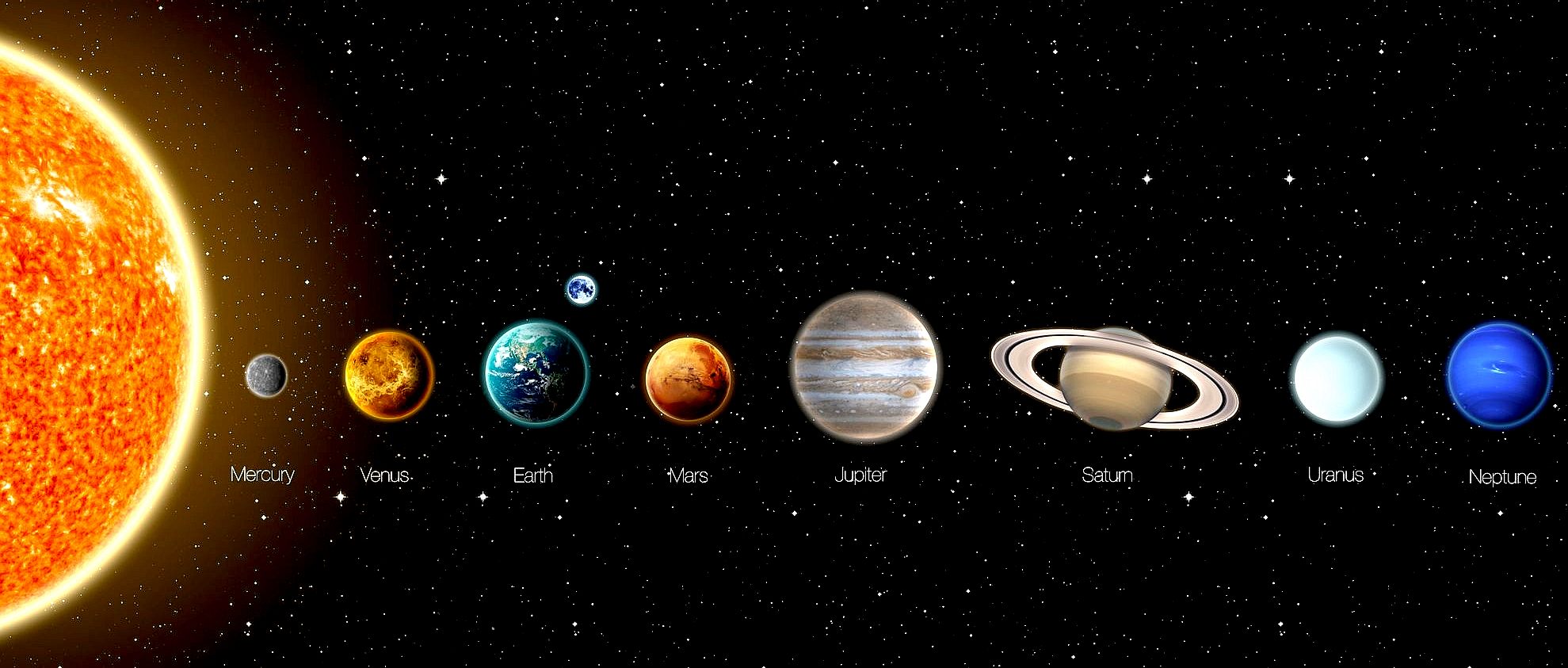
The
Sun is a giant fusion reactor floating in space. The nine planets we know
something about are revolving around the Sun at various distances. The
further away the colder the planet. Meaning that Mercury and Venus will be
unbearably hot, something that could happen to planet Earth if we don't
stop global
warming.
The known universe consists of all of space
(and time), including planets, stars, galaxies, and all other forms of matter and energy.
It is a pretty big subject, where we are having trouble taking stock of
planet earth.
But
the vastness of space and the proliferation of other galaxies, stars and
planets, gives us hope that when we have finally exhausted our natural
resources, that there may be another haven to sustain human life.
The
Moon
and Mars being the easiest to investigate.
The
burning question is whether we will be advanced enough to migrate from
earth, and will we reach that stage before we burn out our beautiful
blue planet?
STRATEGIC
PATHWAYS TO COLONIZATION
The question of how humanity will establish permanent settlements beyond Earth is not merely technical—it is civilizational. Colonization of the Moon and Mars will require choices about sequence, scale, and governance, each pathway carrying echoes of past voyages across oceans and deserts. Just as the Pilgrims debated whether to settle in Virginia or Plymouth, today’s spacefaring nations and private pioneers weigh whether to anchor first on the Moon or leap directly to Mars.
The Moon-First Strategy
The most pragmatic pathway begins with the Moon. NASA’s Artemis program, supported by ESA, JAXA, and CSA, envisions a Gateway station in lunar orbit and surface bases at the south pole, where water ice offers the promise of in-situ resource utilization (ISRU). The Moon provides a nearby proving ground: only three days’ travel from Earth, it allows for rapid resupply and emergency return. Here, humanity can test radiation shielding, closed-loop life support, and nuclear or solar power systems.
China’s CNSA pursues a parallel track, with its Chang’e program laying robotic foundations for a permanent lunar base. Russia, though weakened, has announced plans for a lunar nuclear reactor by 2030, a reminder that energy sovereignty will be as decisive as territorial sovereignty. In narrative terms, the Moon becomes our “Plymouth Rock”—a symbolic first landing where charters are signed, alliances tested, and humanity rehearses the art of living off-world.
The Mars-Direct Strategy
Elon Musk and SpaceX champion a bolder vision: bypass the Moon and establish settlements directly on Mars. The Starship vehicle, capable of carrying over 100 passengers, is designed for mass transport, orbital refueling, and interplanetary voyages. Musk imagines fleets of thousands of Starships ferrying settlers, equipment, and infrastructure to build a self-sustaining city.
Technically, this strategy faces immense hurdles: orbital refueling remains unproven, Mars habitats must withstand radiation and dust storms, and resupply windows occur only every 26 months. Yet the audacity of the Mars-Direct vision resonates mythically. It recalls the
Mayflower’s leap across the Atlantic—dangerous, under-provisioned, but driven by conviction that a new world awaited. In the John Storm universe, this pathway embodies the archetype of the visionary disruptor, willing to risk all for destiny.
Coalition Pathways
A third pathway blends pragmatism and audacity: coalition colonization. NASA, ESA, JAXA, and SpaceX could combine strengths—government agencies providing institutional oversight, science, and governance, while SpaceX supplies transport capacity. This hybrid model mirrors the historical East India Companies, where private enterprise and state power fused to expand frontiers.
In parallel, a China-Russia bloc may pursue independent bases, driven by strategic rivalry. Competing colonies on the Moon could accelerate progress, much as
Cold War competition fueled
Apollo. Yet rivalry also risks duplication and fragmentation of governance.
Private-Led Pathways
Finally, there is the least likely but most dramatic pathway: private colonization. SpaceX alone, without government partnership, establishes the first Martian settlement. Technically possible, but politically fragile, this scenario would raise profound questions of sovereignty, law, and legitimacy. Who governs a privately founded city on Mars? What charter binds its settlers? In narrative terms, this is the archetype of the lone pioneer—heroic, but precarious.
Law, Governance, and Mythic Resonance
Colonization of the Moon and Mars is not only a matter of rockets and habitats—it is a question of law, governance, and the stories we tell ourselves about legitimacy. Just as the Mayflower Compact bound disparate settlers into a community, future spacefarers will require charters, treaties, and symbolic anchors to transform fragile outposts into enduring societies.
Space Law Foundations
The legal framework for space exploration begins with the Outer Space Treaty of 1967, which declares that no nation may claim sovereignty over celestial bodies. It enshrines space as the “province of all mankind,” forbidding military bases or weapons of mass destruction beyond Earth. Yet the treaty is silent on private enterprise, resource extraction, and governance of settlements.
To fill this gap, the Artemis Accords (2020 onwards) propose principles for transparency, interoperability, and resource utilization. Signatories—including
NASA,
ESA, JAXA, and others—commit to peaceful exploration and cooperative norms. China and Russia, however, have declined to join, preferring independent frameworks. This divergence foreshadows a dual legal order: one coalition bound by accords, another by parallel agreements.
Governance Models
Several models of governance are emerging:
Multinational Charters: NASA-led coalitions may draft lunar compacts, echoing the ISS partnership, where responsibilities and benefits are shared.
Bloc Sovereignty: China and Russia may establish bases governed by national law, asserting de facto sovereignty despite treaty prohibitions.
Private Governance: SpaceX’s Mars vision raises profound questions—if a private company establishes a settlement, who governs it? Musk has mused about “direct democracy” on Mars, but legitimacy without international recognition remains fragile.
Hybrid Councils: A pragmatic model may blend state oversight with private initiative, forming councils of agencies, corporations, and settlers.
Mythic Resonance
Law alone cannot sustain colonies; they require mythic resonance to inspire loyalty and sacrifice. The Pilgrims invoked divine providence; the Founding Fathers framed liberty as destiny. In space, charters may be signed with holographic seals, invoking the symbolism of the Mayflower Compact or the Declaration of Independence.
The Moon as Plymouth Rock: A first landing where humanity rehearses governance, drafts compacts, and tests cooperation.
Mars as the New World: A leap into uncertainty, requiring settlers to bind themselves with new myths of survival and destiny.
Charters as Narrative Anchors: In the John Storm universe, holographic charters become dramatic props—documents that embody both law and myth, binding settlers not only legally but spiritually.
Colonization will demand new forms of governance, beyond the Outer Space Treaty. Whether through multinational accords, bloc sovereignty, or private charters, legitimacy will hinge not only on law but on mythic resonance. Humanity’s expansion into the cosmos will be sustained by stories as much as statutes—founding myths that echo Plymouth, Philadelphia, and beyond, now transposed onto lunar regolith and Martian dust.
Conclusion: Humanity’s Destiny Among the Stars
The colonization of the Moon and Mars is not a single project, nor the triumph of one agency or visionary. It is the convergence of engineering, law, and myth—the fusion of rockets, treaties, and stories into a new chapter of human civilization.
Technically, the pathways are clear. The Moon offers proximity, resources, and a proving ground for habitats and energy systems. Mars demands audacity, mass transport, and resilience against isolation. NASA, JAXA, CNSA, Roscosmos, and SpaceX each bring distinct strengths: institutional depth, precision science, rapid expansion, legacy expertise, and disruptive innovation. None alone can achieve colonization; together, they form a mosaic of capability.
Legally, the frameworks remain incomplete. The Outer Space Treaty forbids sovereignty but does not resolve governance of settlements. The Artemis Accords sketch cooperative norms, yet rival blocs pursue independent visions. Private colonization raises profound questions of legitimacy. The future will require new charters—documents that bind settlers across nations and corporations, echoing the Mayflower Compact and the founding constitutions of Earth’s republics.
Mythically, colonization must inspire as well as endure. The Moon will be humanity’s Plymouth Rock, a symbolic first step where compacts are signed and alliances tested. Mars will be our New World, a frontier of uncertainty where survival demands new myths of destiny. Charters, holographic seals, and founding rituals will anchor settlers not only legally but spiritually, transforming fragile outposts into communities with identity and purpose.
Final Vision
Humanity’s destiny is not simply to visit the Moon or Mars, but to found new worlds. Colonization will be coalition-driven, hybrid in nature—state power fused with private innovation, law fused with myth. The Moon will teach us how to live off-world; Mars will teach us how to dream beyond
Earth. Together, they will mark the beginning of a new epoch: the age of interplanetary civilization.
LINKS
& REFERENCE
http://
|